
Stretch Wrap Vs. Palletizing Adhesive: A Complete Comparison
Stretch wrap stabilizes a pallet by applying external containment force around the load. Manufacturers apply palletizing adhesive between layers to help reduce movement within the load. Because poor load stability increases the risk of product damage, workplace injuries, freight inefficiencies, and added material costs, many manufacturers use both. Palletizing adhesive can help improve internal stability while reducing the amount of stretch wrap and other tertiary packaging required.
The right approach depends on your load configuration, packaging substrates, production volume, equipment, distribution environment, sustainability goals, and budget. Palletizing adhesive is not automatically a complete replacement for stretch wrap, but it can provide manufacturers with a practical way to reduce plastic packaging consumption and improve pallet-stabilization efficiency.
APPLIED Adhesives helps manufacturers evaluate the complete palletizing process, test adhesive compatibility, and determine whether a palletizing adhesive program can deliver measurable operational value.
What Is the Difference Between Palletizing Adhesive and Stretch Wrap?
A big difference between plastic stretch wrap and palletizing adhesive solutions is how each solution stabilizes the pallet load.
Stretch wrap surrounds the outside of the pallet and uses film tension to create external containment force.
Palletizing adhesive is applied between individual layers of cases, bags, cartons, or other packaged products. It creates controlled friction between those layers to help reduce lateral movement during handling and transportation.
These pallet stabilization methods are not mutually exclusive. In many applications, palletizing adhesive is used with a reduced amount of stretch wrap to provide both internal stabilization and external containment.
Palletizing Adhesive Vs. Stretch Wrap at a Glance
| Comparison | Stretch Wrap | Palletizing Adhesive |
|---|---|---|
| Stabilization Method | External film tension and containment | Controlled friction between pallet layers |
| Position on the Load | Wrapped around the outside | Applied between cases, bags, or other packaged products |
| Plastic Consumption | High, requires plastic film | Lower, can help reduce stretch-film and dunnage usage |
| Application Method | Manual, semiautomatic, or automatic | Commonly semiautomatic or automatic |
| Equipment Requirements | Wrapping equipment may be required | Compatible adhesive-dispensing equipment is required |
| Substrate Considerations | Can accommodate many load shapes and packaging types | Adhesive must be matched to the packaging substrate |
| Primary Advantage | Familiar and widely used containment method | Internal pallet load stabilization with potential material reduction |
| Primary Limitation | Creates ongoing film usage and plastic waste | Usually reduces rather than completely eliminates stretch wrap |
| Ideal Use Case | Broad range of manual and automated operations | Consistent, repeatable palletizing operations |
The right solution may be stretch wrap, palletizing adhesive, or a combination of both. The decision should be based on testing and the requirements of the specific operation.
How Does Pallet Stretch Wrap Work?
Pallet stretch wrap is typically a polyethylene film that is wrapped around the outside of a unitized load in overlapping layers to stabilize the load. Tension in the stretched film creates an inward force that helps hold the products together during storage, handling, and transportation.
Stretch wrap can be applied:
- Manually with handheld rolls
- With semiautomatic wrapping equipment
- Through fully automated stretch-wrapping systems
The amount of film used depends on the load, film properties, wrapping pattern, equipment settings, and required containment force.
Stretch wrap remains widely used for pallets because it is familiar, broadly available, and adaptable to different pallet configurations, including providing external containment for heavy, irregular, or inconsistent loads. Although stretch wrap is a popular method of pallet stabilization, improper application can create problems. Too little containment force may allow the load to shift, while excessive force may crush or damage products.
How Does Palletizing Adhesive Work?
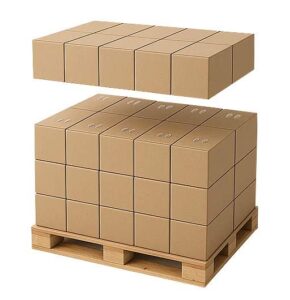 Palletizing adhesive is an adhesive solution applied to products as they are stacked on the pallet to help stabilize the load during transit and shipping. The adhesive creates controlled friction between layers to help reduce lateral movement throughout the load. When used correctly, these adhesives create a temporary bond that will separate cleanly when operators disassemble the load, so there is no damage to the products.
Depending on the formulation and application, the adhesive can be dispensed as a spray or bead. Palletizing adhesive systems are often integrated into automated production and palletizing lines.
A properly selected pallet adhesive system should:
- Be compatible with the packaging substrate
- Provide the required stabilization
- Release appropriately when the pallet is disassembled
- Not damage cases, bags, labels, or graphics
- Perform under the expected storage and shipping conditions
- Apply adhesive consistently at the required production speed
Different packaging materials require different adhesive properties. Corrugated cases, coated cartons, plastic bags, and other substrates should be evaluated individually before implementation.
Can Palletizing Adhesive Replace Stretch Wrap for Pallet Stabilization?
Palletizing adhesive often reduces the amount of stretch wrap required for load stabilization but is generally not a complete replacement or alternative to plastic stretch wrap. For best results, manufacturers often use palletizing adhesive and plastic stretch wrap together. Stretch wrap provides external containment around the load, while palletizing adhesive provides internal stabilization between the layers.
For example, an operation may use palletizing adhesive to reduce case movement within the stack and then apply fewer layers of stretch film for external containment. The appropriate reduction in stretch wrap use for the pallet will depend on:
- Load weight
- Pallet pattern
- Package shape
- Packaging substrate
- Distribution conditions
- Handling requirements
- Existing film application
- Required containment force
Testing is necessary to determine the appropriate amount of stretch wrap needed.
Comparing Load Stability
Load stability is a system-level outcome and depends on the packaging, pallet pattern, unitization method, equipment settings, handling process, and transportation environment. Unstable loads can lead to product damage, wasted inventory, customer complaints, and unsafe working conditions.
Stretch wrap applies force around the outside of the pallet. Its effectiveness depends on consistent application and appropriate containment force. Factors like film type and gauge, pre-stretch percentage, number of revolutions, wrapping pattern, equipment settings, load shape, and corner and edge conditions can also impact results. If the plastic film is applied too loosely, the load may shift. If it is applied too tightly, it may damage or deform certain packages.
Palletizing adhesive helps create friction between layers throughout the pallet. This internal stabilization can help reduce lateral movement during handling, vibration, and transportation. Performance depends on selecting the right adhesive and applying the appropriate amount in the correct pattern. The packaging material, surface condition, pallet configuration, temperature, and shipping environment can all affect results.
Comparing the Total Cost per Pallet
The price of a roll of stretch film or a container of palletizing adhesive does not provide a complete cost comparison. Manufacturers should evaluate the total cost per pallet, including material, labor, disposal, maintenance, and damage rather than focusing only on stretch-film purchase price.
The total cost per pallet can include the cost of:
- Stretch-film consumption
- Adhesive consumption
- Labor required for application and removal
- Dispensing or wrapping equipment
- Equipment maintenance
- Plastic disposal or recycling
- Dunnage usage
- Product damage
- Rework
- Throughput
- Unplanned downtime
A palletizing adhesive system requires compatible dispensing equipment and an initial investment. ROI will depend on the operation’s current material usage, production volume, labor, damage rates, and achievable packaging reductions. APPLIED Adhesives can help document the current process and estimate the potential operational impact before a broader implementation.
Comparing the Sustainability Impact
Stretch wrap creates an ongoing plastic-material requirement. After use, the film must be collected, managed, and recycled or discarded. Actual recyclability may depend on local collection programs, material condition, contamination, and the recycling options available to the facility. When appropriate recovery programs are unavailable, used film may become part of the facility’s waste stream.
Palletizing adhesive can help reduce stretch-film consumption by providing stabilization between the layers of a pallet. Depending on the application, it may also reduce the need for plastic dunnage and other tertiary packaging materials.
Reducing film usage may help manufacturers:
- Decrease the amount of material used per pallet
- Lower virgin plastic consumption
- Reduce packaging waste
- Support internal sustainability targets
- Respond to packaging-reduction initiatives
- Reduce material-based packaging fees under laws such as EPR laws
Advantages and Limitations of Stretch Wrap
Some advantages of stretch wrap for pallet stabilization include the following:
- Is familiar to operators
- Is widely available
- Allows manual or automatic application
- Works with many package shapes and substrates
- Provides external containment
- Can be effective for irregular or inconsistent loads
- May require a lower initial investment in manual operations
Some limitations include:
- Recurring plastic consumption
- Ongoing film purchases
- Generation of material that requires recycling or disposal
- Potential effects of incorrect application on load stability
- Potential damage to certain packages from excessive force
- Variability in manual application
- Obstruction of labels or barcodes by film
- Potential conflicts with plastic-reduction objectives
Stretch wrap remains an effective solution for many operations. The opportunity is to determine whether the current process uses more film than necessary or whether internal stabilization could improve the total system.
Advantages and Limitations of Palletizing Adhesive
Some advantages of palletizing adhesive include the following:
- Helps reduce movement between pallet layers
- Can reduce stretch-wrap and dunnage requirements
- Supports plastic-reduction initiatives
- May lower packaging-material consumption
- Can be integrated into automated palletizing lines
- Keeps more of the outer case surface visible
- Can support consistent, repeatable application
- May reduce total cost per pallet in suitable applications
Some limitations include:
- Inability to replace stretch wrap in every application
- Need for dispensing equipment
- Need to match the adhesive to the packaging substrate
- Need for application testing
- Potential effects of environmental conditions on performance
- Need for additional stabilization for inconsistent or irregular loads
- Need to maintain equipment settings and adhesive application
Palletizing adhesive is most effective when it is treated as part of the complete palletizing process rather than as a simple material substitution.
When Should You Use Stretch Wrap for Pallet Stabilization?
Stretch wrap may be the better primary stabilization method for pallets when:
- Palletizing is performed manually
- Production volume is relatively low
- Loads vary significantly in size or configuration
- Pallets contain irregularly shaped products
- The operation cannot currently integrate dispensing equipment
- Strong external containment is required
- Capital investment is limited
- Packaging substrates are not suitable for adhesive application
Even in these situations, a film audit may identify opportunities to optimize the wrapping pattern, film choice, or amount used.
When Should You Use Palletizing Adhesive?
Palletizing adhesive may be worth implementing when:
- The facility ships a high volume of pallets
- Pallet configurations are consistent
- Automated palletizing is already in place
- Stretch-wrap consumption is high
- Plastic reduction is a business priority
- Excessive dunnage is being used
- Cases or bags shift within the pallet
- Load movement contributes to product damage
- Labels or barcodes need to remain visible
- Packaging costs are increasing
- EPR or other packaging considerations are influencing material decisions
These conditions indicate a potential fit, not a guaranteed outcome. Compatibility and performance should be confirmed through testing.
How to Evaluate a Palletizing Adhesive Program
While palletizing adhesive may seem like a good fit, a structured evaluation can help determine whether it actually makes sense for an operation.
1. Document the current process
Establish a baseline for:
- Pallets shipped
- Film used per pallet
- Dunnage used per load
- Material costs
- Labor requirements
- Damage or load-failure rates
- Application time
- Waste and disposal costs
2. Define the desired outcome
Clarify whether the primary goal is to:
- Improve load stability
- Reduce pallet stretch wrap
- Reduce dunnage
- Lower material costs
- Support sustainability targets
- Improve label visibility
- Reduce product damage
3. Review the load and substrates
Evaluate the case coating, bag film, carton surface, pallet pattern, load weight, stacking configuration, and environmental conditions.
4. Select a compatible adhesive
The formulation must match the packaging substrate and expected storage, handling, and transportation conditions.
5. Conduct controlled testing
Test the adhesive application, load stability, clean-release performance, stretch-wrap reduction, and compatibility under conditions representative of the actual operation.
6. Compare results with the baseline
Evaluate material usage, cost per pallet, load performance, damage, throughput, and waste. Scale the program only after the new process delivers repeatable results.
How APPLIED Helps Optimize Pallet Stabilization
Choosing between stretch wrap and palletizing adhesive does not have to be an either-or decision. APPLIED Adhesives works with manufacturers to review their full palletizing process and find the right solution for them. Our team can help select the appropriate adhesive, test application performance, review dispensing requirements, provide implementation support, and assist with process optimization.
APPLIED’s BREAKAWAY® palletizing stabilization solutions help manufacturers improve load stability while reducing their reliance on stretch wrap and other tertiary packaging materials.
Want to evaluate your pallet-stabilization process? Contact the APPLIED Adhesives team to discuss your application and learn more about possible solutions.
Frequently Asked Questions
Is palletizing adhesive the same as palletizing glue?
Typically, yes. Palletizing adhesive and palletizing glue are often used to describe the same general product category. Manufacturers need to be sure they select a formulation specifically designed for compatibility with their packaging substrate.
Can palletizing adhesive completely replace stretch wrap?
Typically, palletizing adhesive is used in tandem with stretch wrap for pallet stabilization, not as a complete stretch-wrap alternative. Pallet adhesive can reduce stretch wrap and provide internal stabilization, while stretch wrap provides external containment.
How much stretch wrap can palletizing adhesive reduce?
The amount depends on the pallet configuration, load weight, packaging substrate, shipping conditions, current wrapping process, and required containment force. Application testing is necessary to determine how much stretch wrap the load still needs.
Will palletizing adhesive damage cartons or bags?
When using a compatible, properly applied formulation, no. Pallet stabilization adhesive is designed to release without damaging the packaging material. Performance must be tested with the specific carton coating, film, bag, label, or other substrate used in the application.
Are palletizing adhesives suitable for heavy loads?
In some cases, yes, but suitability depends on more than just pallet weight. The adhesive, substrate, stacking pattern, product geometry, transportation conditions, and amount of external containment must be evaluated together. Testing under representative conditions is recommended.
Do palletizing adhesives require special equipment?
Yes. Palletizing adhesive requires compatible pallet adhesive equipment for application. They are commonly incorporated into automated palletizing lines using spray or bead application systems.
What is the ROI of a palletizing adhesive system?
The ROI of palletizing stabilization adhesive depends on current stretch-wrap and dunnage consumption, production volume, labor, equipment investment, waste costs, and any reduction in product damage. A site-specific baseline and controlled trial are needed to calculate a realistic return.
While dispensing equipment can require a higher initial investment, high-volume facilities often see payback. Read how one beverage company was able to save after implementing palletizing adhesive.
Can palletizing adhesive support sustainability goals?
In some cases, yes. Palletizing adhesive can reduce stretch-film and other tertiary packaging usage, which may support more sustainable pallet stabilization and contribute to a business’s sustainability goals.
Looking to make your business more sustainable? Learn more about APPLIED’s sustainable adhesive solutions.